Information Security in the Workplace- Illegal Internet Connection-v

July 17, 2020
With the advancement of IT-based transformation and the rapid development of IT, various network technologies have seen more extensive and profound applications, along with which come a multitude of cyber security issues. Come to find out what information security issues you should beware of in the workplace.
(more…)IP Reputation Report-07122020

July 16, 2020
1. Top 10 countries in attack counts:
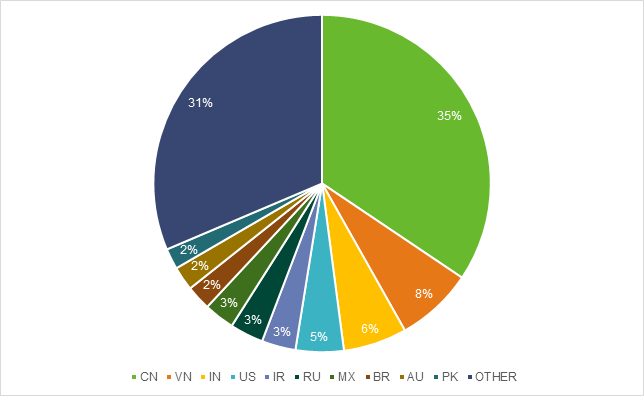
- The above diagram shows the top 10 regions with the most malicious IP addresses from the NSFOCUS IP Reputation databases at July 12, 2020.
2019 Cybersecurity Insights -11

July 15, 2020
Cryptomining Traffic
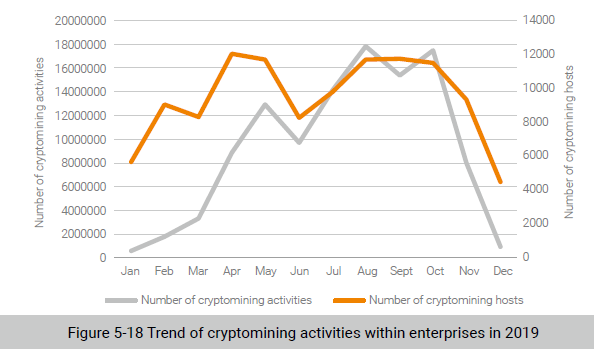
Based on all sorts of security alert data from NSFOCUS Managed Security Service (MSS), we made a quantitative analysis of cryptomining activities and hosts in enterprises in 2019 and found that the cryptomining topicality is positively correlated with the cryptomining market trend.
Design of Protection Against HTTPS-Targeted DDoS Attacks

July 14, 2020
As more and more Internet business is switched to the encrypted HTTPS from the plaintext HTTP, distributed denial of service (DDoS) attacks against HTTPS are also on the rise, including attacks targeting the SSL/TLS handshake and HTTPS services. Protecting against HTTPS-targeted DDoS attacks has always been a hard nut to crack within the industry. This document describes the working principle and harm of this kind of attacks as well as the protection design and practices.
(more…)Botnet Trend Report 1

July 13, 2020
Executive Summary
With the rapid advancement of computer technologies and more and more network devices joining the Internet, the global Internet has expanded at an unbelievably high speed. However, efforts made in enhancing cybersecurity are lagging far behind the growth of the Internet, leaving an ever-growing gap in between. Many cybercrime groups and individuals are trying to take hold of insufficiently secured network resources and turn them into botnet clusters for the purpose of garnering illegal profits.
(more…)2019 Cybersecurity Insights -10
July 10, 2020
Second Largest Gang by the Number of Attack Sources
The second largest gang in terms of the number of attack sources generated the largest traffic. This gang had 23,000 recidivists and favored volumetric SYN flood attacks. According to historical attack records, 99.54% of recidivists had resorted to this kind of attack. This gang stayed active from January to October and was at its busiest in May.
Figure 5-14 shows the monthly quantity trend of attack sources and attack targets of this gang. We can see that this gang remained active from January to October, having more attack sources in January, April, May, and June. On average, 6000 active attack sources launched attacks against seven targets each month.
(more…)IP Reputation Report-07052020
July 9, 2020
1.Top 10 countries in attack counts:
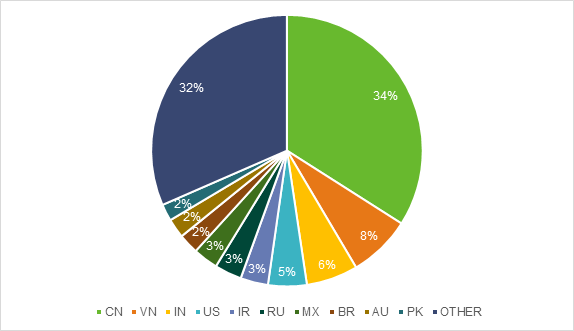
- The above diagram shows the top 10 regions with the most malicious IP addresses from the NSFOCUS IP Reputation databases at July 5, 2020.
2019 Cybersecurity Insights -9
July 8, 2020
In 2019, 7% of recidivists1 were responsible for 78% of DDoS attacks. Obviously, recidivists are too menacing to overlook. Several groups of DDoS recidivists often work together to initiate attacks. Such groups are collectively referred to as an “IP gang”. In 2019, a total of 60 DDoS gangs were detected, including 15 ones that contained more than 1000 attack sources. The largest gang, formidably, consisted of 88,000 attack sources. On average, 35,000 attack sources remained active every month. Therefore, we should keep vigilant on gang behavior and attack gangs. In this section, we will profile and analyze major attack gangs.
(more…)2019 Cybersecurity Insights -8
July 7, 2020
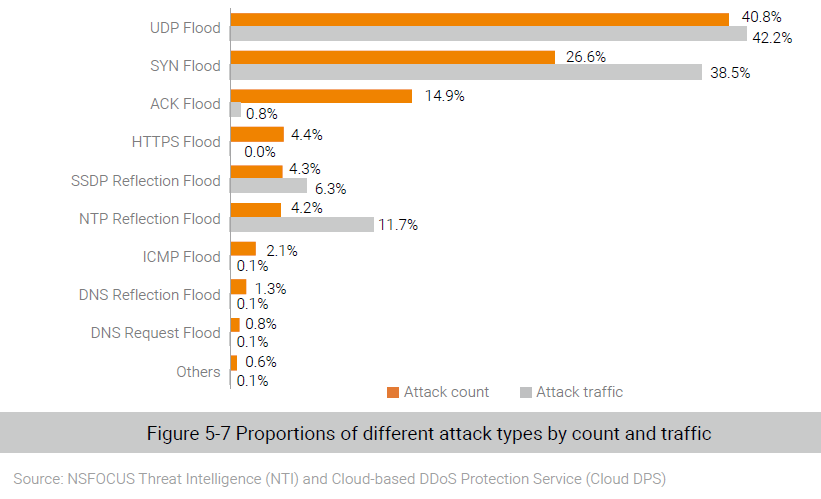
In 2019, most frequently seen attacks were UDP floods, SYN floods, and ACK floods, which together accounted for 82% of all DDoS attacks. By contrast, reflection attacks took up only 10%. Compared with 2018, reflection attacks rose slightly in number, but remained small in proportion.
Apache Dubbo Remote Code Execution Vulnerability (CVE-2020-1948) Patch Bypass Threat Alert

July 6, 2020
Overview
On June 23, NSFOCUS reported that Apache Dubbo contained a remote code execution vulnerability (CVE-2020-1948) resulting from deserialization.
Apache Dubbo is a high-performance Java RPC framework. The vulnerability exists in Hessian, a default deserialization tool used by Apache Dubbo. An attacker may exploit it by sending malicious RPC requests which usually contain unidentifiable service or method names and some malicious parameter loads. When malicious parameters are deserialized, the vulnerability is triggered, allowing the attackers to remotely execute code.
(more…)