
Computer system designers may use syslog for system management and security auditing as well as general informational, analysis, and debugging messages. A wide variety of devices, such as printers, routers, and message receivers, across many platforms use the syslog standard. This permits the consolidation of logging data from different types of systems in a central repository. Implementations of syslog exist for many operating systems.
When operating over a network, syslog uses a client-server architecture where a syslog server listens for and logs messages coming from clients.
To configure syslog settings on NSFOCUS NTA, follow these steps:
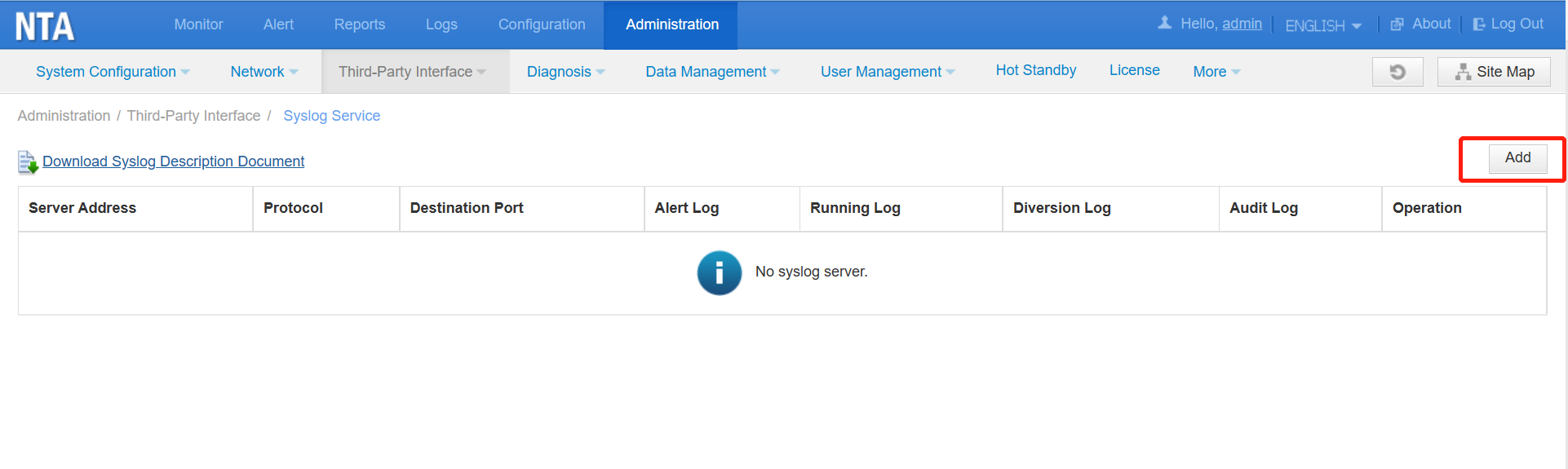
1. Choose Administration > Third-Party Interface > Syslog Service.
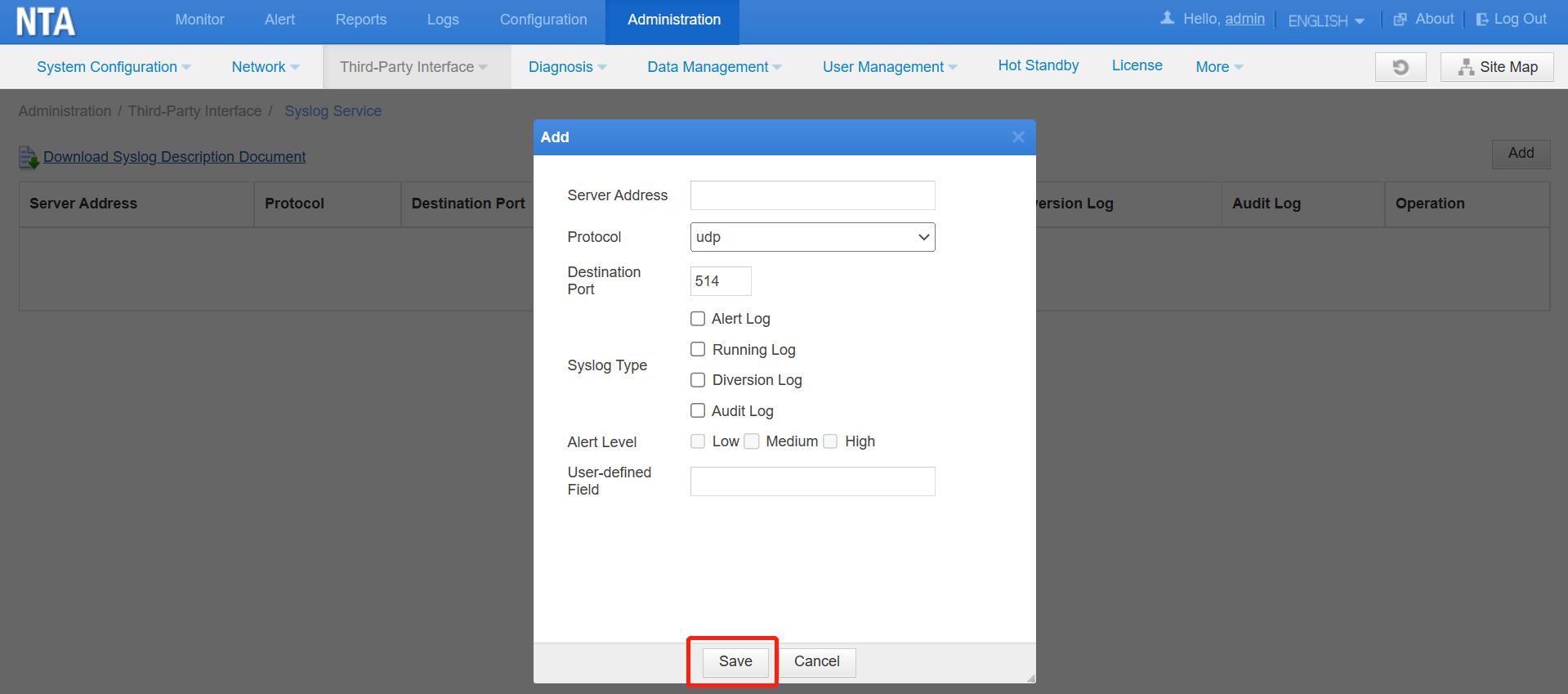
2. Click Add in the upper-right corner and configure a syslog server.
Description
- Server Address: Specifies the IP address of the Syslog server.
- Protocol: Specifies the protocol type that the Syslog server uses to provide the service, which can be udp or TCP.
- Destination Port: Specifies a port for the Syslog server to receive logs. The default port is 514.
- Syslog Type: Specifies the types of logs to be dumped to the Syslog server. Must select at least one type.
- Alert Level: Specifies which levels of alert will be sent to the Syslog server. This field is available only when Syslog Type is set to Alert Logs.
- User-defined Field: Specifies the custom contents to be sent to the Syslog server.
3. Click Save to commit the settings.
4. Use Syslog Watcher Pro to parse NTA’s syslog messages.


