
Skip to content
  • Blog
  • Trial Enquiry
  • Support Portal
  • 中文
  • Portuguese
  • Blog
  • Trial Enquiry
  • Support Portal
  • 中文
  • Portuguese
Logo of NSFOC featuring a green star and bold letters.
  • Cloud-Delivered Services
    • Cloud DDoS Protection Service (Cloud DPS)
    • Continuous Threat Exposure Management
    • Threat Intelligence Service
      • Threat Intelligence
      • Exposed Internet Surface Analysis
      • Attack Threat Monitoring
  • Products
    • DDoS Attack Protection
    • Security Operations
      • Intelligent Security Operations Platform (ISOP)
      • Network Detection and Response (NDR)
      • Unified Threat Sensor (UTS)
    • Remote Security Assessment System
    • Web Application & API Protection
    • Threat and Vulnerability Management Platform​
    • Next-Generation Firewall
    • Next Generation Intrusion Prevention (NGIPS)
  • Solutions
    • DDoS Defenses
      • On-Premises DDoS Defenses
      • Hybrid DDoS Protection
    • 5G Network Security Solution
    • Value-Added Service for ISP/MSP
  • Support Services
    • Services Overview
    • NSFOCUS Product Support Services
    • NSFOCUS Professional Services
    • NSFOCUS Security Assessment Services
    • NSFOCUS Managed Security Services
    • Training Services
  • Resources
    • Datasheets
    • Reports
    • Whitepapers
    • Case Studies
    • Infographics
    • Articles
  • News and Events
    • Press Releases
    • NSFOCUS in the News
    • Global Events
  • Company
    • About
    • Management Team
    • NSFOCUS Security Labs
    • Careers
    • Contact Us
  • Cloud-Delivered Services
    • Cloud DDoS Protection Service (Cloud DPS)
    • Continuous Threat Exposure Management
    • Threat Intelligence Service
      • Threat Intelligence
      • Exposed Internet Surface Analysis
      • Attack Threat Monitoring
  • Products
    • DDoS Attack Protection
    • Security Operations
      • Intelligent Security Operations Platform (ISOP)
      • Network Detection and Response (NDR)
      • Unified Threat Sensor (UTS)
    • Remote Security Assessment System
    • Web Application & API Protection
    • Threat and Vulnerability Management Platform​
    • Next-Generation Firewall
    • Next Generation Intrusion Prevention (NGIPS)
  • Solutions
    • DDoS Defenses
      • On-Premises DDoS Defenses
      • Hybrid DDoS Protection
    • 5G Network Security Solution
    • Value-Added Service for ISP/MSP
  • Support Services
    • Services Overview
    • NSFOCUS Product Support Services
    • NSFOCUS Professional Services
    • NSFOCUS Security Assessment Services
    • NSFOCUS Managed Security Services
    • Training Services
  • Resources
    • Datasheets
    • Reports
    • Whitepapers
    • Case Studies
    • Infographics
    • Articles
  • News and Events
    • Press Releases
    • NSFOCUS in the News
    • Global Events
  • Company
    • About
    • Management Team
    • NSFOCUS Security Labs
    • Careers
    • Contact Us
UNDER ATTACK? CALL US

November 18, 2025 – Cloudflare Global Outage (not a DDoS)

  • Time: Started ~11:20 UTC, major issues until ~14:30 UTC, full recovery by ~17:06 UTC.
  • Scope: Affected a huge portion of the internet — thousands of sites and services behind Cloudflare (X/Twitter, OpenAI/ChatGPT, Spotify, Claude.ai, Discord, Crunchyroll, etc.).
  • Symptoms: 500 Internal Server errors, endless CAPTCHA loops, sites completely unreachable.
  • Initial suspicion: Cloudflare briefly thought it was a “hyper-volumetric” DDoS attack because of the sudden global spike in errors.
    • “When the issue first started, the symptoms looked very similar to a hyper-volumetric DDoS attack. We initially wrongly suspected the symptoms we were seeing were caused by a hyper-scale DDoS attack. As we dug deeper, we correctly identified the core issue was not an attack…”
  • Root cause (confirmed):
    • ML feature configuration file in Bot Management grew too large (>100 MB in some cases).
    • This caused crashes in Cloudflare’s edge proxy processes worldwide.
    • No customer data was lost or compromised.
    • Cloudflare’s official statement: “There is no evidence that this was the result of an attack or caused by malicious activity.”
  • Official Source: https://blog.cloudflare.com/18-november-2025-outage/

The timing and Cloudflare’s brief initial misdiagnosis caused widespread confusion, with many people incorrectly believing Cloudflare had been DDoSed. Some reports even mentioned that the Cloudflare Incident was linked to an earlier DDoS incident towards Microsoft Azure. In reality, the two events were unrelated.

October 24, 2025 – The Microsoft Azure DDoS Incident – Record Breaking 15Tbps

  • Size: 15.72 Tbps (terabits per second) – the largest publicly disclosed DDoS attack ever recorded.
  • Target: Primarily Microsoft Azure infrastructure and customers.
  • Attack type: Multi-vector Layer 3/4 flood (UDP reflection/amplification + other protocols), launched from over 500,000 source IPs across various regions.
  • Botnet involved: The attack originated from Aisuru botnet. Aisuru is a Turbo Mirai-class IoT botnet that exploiting compromised home routers and cameras, mainly in residential ISPs in the United States and other countries.
  • This attack did not involve or affect Cloudflare.
  • Source: https://techcommunity.microsoft.com/blog/azureinfrastructureblog/defending-the-cloud-azure-neutralized-a-record-breaking-15-tbps-ddos-attack/4470422

NSFOCUS Hybrid DDoS Solution

The combination of NSFOCUS On-Premises DDoS Defenses combined with NSFOCUS Cloud DDoS Defenses eliminates all DDoS attacks targeting both customers and infrastructure. The combination enables providers to deliver Managed DDoS Services with a multi-tenant Platform that produces the lowest operating costs in the industry. NSFOCUS Cloud DDoS Protection brings you with a standalone service with global POPs and high availability, dedicated bandwidth for DDoS traffic absorption only, and simple yet robust structure designed mainly for mitigating massive DDoS attack traffic.
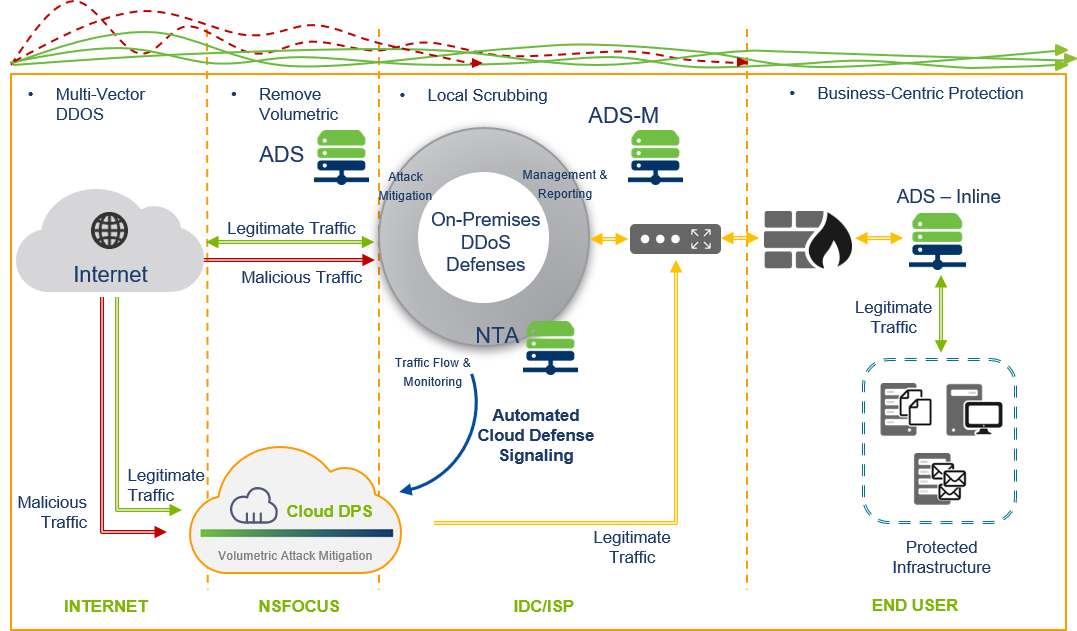
This makes you stay away from potential chaos from biggest cloud service platforms as complex structure and services may make it difficult to manage and thus could bring massive outage incidents. Staying away from the most targeted tenants/services hosted in biggest cloud service platforms who may attract record breaking DDoS traffic will also help you to avoid possible outages.

Post Views: 138

CLOUD-DELIVERED SERVICES

  • Cloud DDoS Protection Service
  • Continuous Threat Exposure Management
  • Threat Intelligence Service
  • Exposed Internet Surface Analysis
  • Attack Threat Monitoring

PRODUCTS

  • DDoS Attack Protection
  • Security Operations
  • Unified Threat Sensor
  • Remote Security Assessment System
  • Web Application & API Protection
  • Threat and Vulnerability Management Platform
  • Next-Generation Firewall
  • Next Generation Intrusion Prevention

SOLUTIONS

  • On-Premises DDoS Defenses
  • Hybrid DDoS Defenses
  • Value-Added Service for ISP/MSP
  • 5G Network Security Solution

SUPPORT & SERVICES

  • Services Overview
  • NSFOCUS Product Support Services
  • NSFOCUS Professional Services
  • NSFOCUS Security Assessment Services
  • NSFOCUS Managed Security Services
  • Training Services

RESOURCES

  • Datasheets
  • Reports
  • Whitepapers
  • Case Studies
  • Infographics
  • Articles

NEWS AND EVENTS

  • Press Releases
  • NSFOCUS in the News
  • Global Events

COMPANY

  • About
  • Management Team
  • NSFOCUS Security Labs
  • Careers
  • Contact Us

©COPYRIGHT 2026, NSFOCUS. ALL RIGHTS RESERVED

PRIVACY POLICY | TERMS OF USE | LEGAL TERMS AND CONDITIONS

Facebook Linkedin X-twitter

We are using cookies to give you the best experience on our website.

You can find out more about which cookies we are using or switch them off in .

  • English
  • Português (Portuguese (Brazil))
NSFOCUS
Powered by  GDPR Cookie Compliance
Privacy Overview

This website uses cookies so that we can provide you with the best user experience possible. Cookie information is stored in your browser and performs functions such as recognising you when you return to our website and helping our team to understand which sections of the website you find most interesting and useful.

Strictly Necessary Cookies

Strictly Necessary Cookie should be enabled at all times so that we can save your preferences for cookie settings.