Introduction to NSFOCUS WAF Blocking Method

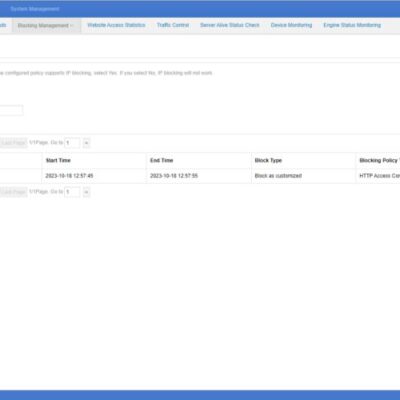
When you configure a protection policy for your protected website and set the protection action to block, NSFOCUS WAF supports three methods to execute blocking actions: Source IP Block, Session Block, and UA Block. Session Block and UA Block are newly added on system version 6073. Each block supports three...

NTA SMTP Functionality Usage

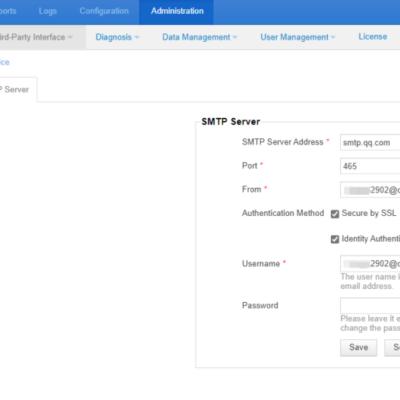
Customers can enable SMTP functionality to ensure timely receipt of alert notifications and device logs. Below are the steps to configure SMTP functionality. Configuring an SMTP Server 1. Choose Administration > Third-Party Interface > Email Service and click SMTP Server 2. Configure parameters Parameters for configuring an SMTP server: ParameterDescriptionSMTP...

NSFOCUS WAF Running Modes

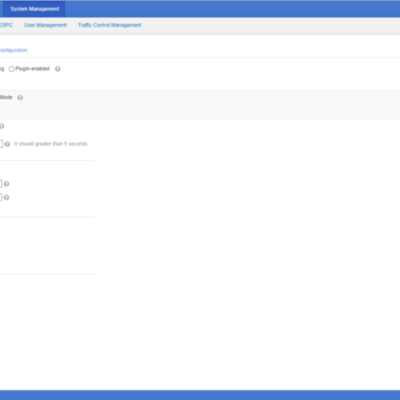
NSFOCUS WAF supports multiple running modes. You can modify the running mode based on the network topology. Deployment Topology Deployment Topology can be set to In-Path, Out-of-Path, Reverse Proxy, Mirroring or Plugin-enabled. In-Path Deployment: Deployed between the client end and the Web server, WAF checks traffic destined for the Web...

Introduction to WAF Exception Policy

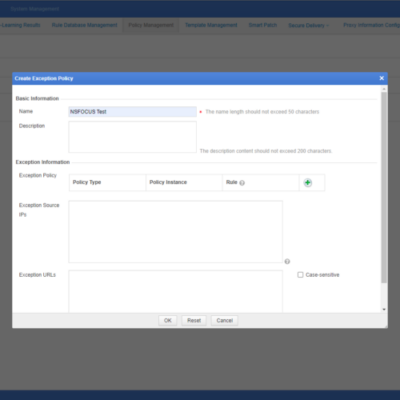
Exception policies are supplements or restrictions to configured basic or advanced protection policies. On the Exception Policy page, you can create, edit, delete, and duplicate exception policies. You can also create and edit exception policies on the Website Protection page. Configuration procedure: Choose Security Management > Policy Management > Exception...

HTTP/2 Protection in ADS R90F03

Function Description For HTTPS application layer protection, ADS establishes a TLS connection with a client in replace of the server, and then authenticates the client through the application-layer protocol HTTP. If the client properly responds to the HTTP packet from ADS, ADS deems this client reliable and will add it...

NSFOCUS
Privacy Overview

This website uses cookies so that we can provide you with the best user experience possible. Cookie information is stored in your browser and performs functions such as recognising you when you return to our website and helping our team to understand which sections of the website you find most interesting and useful.