NSFOCUS WAF Disguised Response File Management

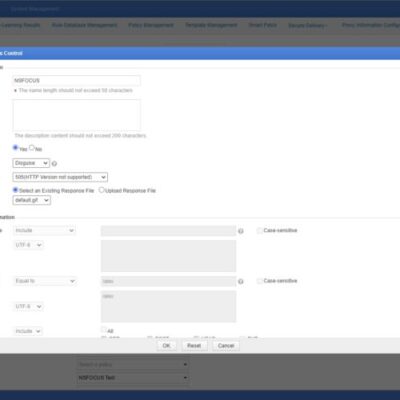
For a specific protection policy, NSFOCUS WAF can configure five actions. For more details, please view NSFOCUS WAF Protection Actions. When configuring a policy with Action set to Disguise, you need to select an existing disguised response file or upload a new one. Such files, whether existing or newly uploaded,...

ADS Attack Traffic Statistics Graph

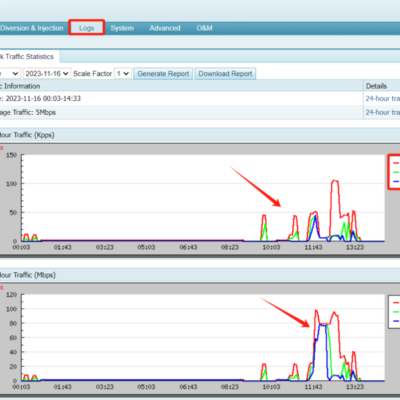
In the 24-Hour Traffic graph under Logs -> Logs Analysis > Attack Traffic Statistics of ADS, you will find the graph displaying three lines: ALL_RX_MAX (represented by the red line), ALL_RX (represented by the green line), and ALL_TX (represented by the blue line). The explanation of each line is: ALL_TX...

Troubleshooting for NTA and ADS Automatic Diversion

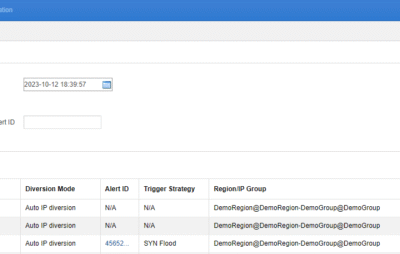
When NTA detects abnormal traffic, it can notify ADS to divert the traffic. ADS sends route diversion notifications to the router, redirecting the traffic to ADS for cleaning. Based on this scenario, this article will summarize troubleshooting directions when traffic is not successfully diverted to ADS. 1. Check whether automatic...

Introduction to NTA Automatic Diversion

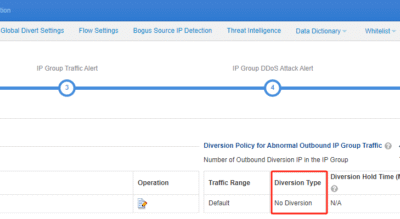
NTA supports configuring automatic diversion for Region/IP Group traffic alerts and Region/IP Group DDoS attack alerts. There are different diversion methods for various scenarios, including ADS Diversion, Flowspec Diversion, BGP Diversion, and Null-Route Diversion For the Region/IP Group traffic alert, the following conditions must be met to perform automatic diversion...

Introduction to NSFOCUS WAF SNMP

Simple Network Management Protocol (SNMP) is an application-layer protocol that transmits management data between network devices. SNMP belongs to the Transmission Control Protocol/Internet Protocol (TCP/IP) family and is one of the most widely used network protocols for managing and monitoring network components across a variety of industries. The majority of...

NSFOCUS
Privacy Overview

This website uses cookies so that we can provide you with the best user experience possible. Cookie information is stored in your browser and performs functions such as recognising you when you return to our website and helping our team to understand which sections of the website you find most interesting and useful.