Use ADS Programmable Rules to Customize Protection Capabilities

This document will guide you through the process of leveraging programmable rules in ADS to customize your protection capabilities. Unlike static solutions, the programmable defense allows you to create custom rules and policies that respond to attacks in real time, providing more precise and effective protection. NSFOCUS ADS has incorporated...

NTP Reflection Protection in ADS

An NTP amplification attack is a reflection-based volumetric distributed denial-of-service (DDoS) attack in which an attacker exploits a Network Time Protocol (NTP) server functionality to overwhelm a targeted network or server with an amplified amount of UDP traffic, rendering the target and its surrounding infrastructure inaccessible to regular traffic. An...

Policy Adjustment Based on Attack Events in ADS

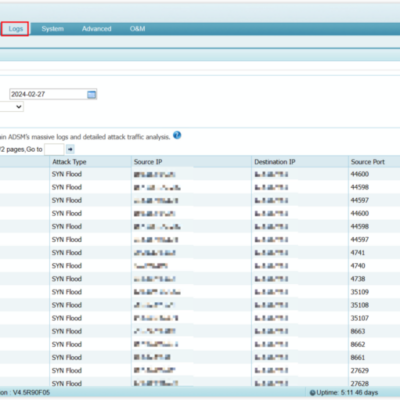
This article provides a brief explanation of policy fine-tuning in ADS. Please note that fine-tuning the protection policy is a time-consuming process. This article focuses on how to check attack details in ADS based on attack events and optimize policies accordingly. Due to different versions of ADS, the screenshots shown...

Preparation for ADS Diversion

This article summarizes the preparation configuration of ADS diversion. The specific configuration details may vary depending on the information of the ADS on the client side, router information, and ADS version. The configuration content and order can be referenced from this article. 1. Before configuring diversion, it is necessary to...

ADS Attack Traffic Statistics Graph

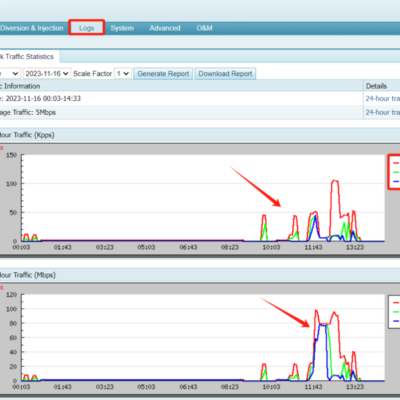
In the 24-Hour Traffic graph under Logs -> Logs Analysis > Attack Traffic Statistics of ADS, you will find the graph displaying three lines: ALL_RX_MAX (represented by the red line), ALL_RX (represented by the green line), and ALL_TX (represented by the blue line). The explanation of each line is: ALL_TX...

NSFOCUS
Privacy Overview

This website uses cookies so that we can provide you with the best user experience possible. Cookie information is stored in your browser and performs functions such as recognising you when you return to our website and helping our team to understand which sections of the website you find most interesting and useful.