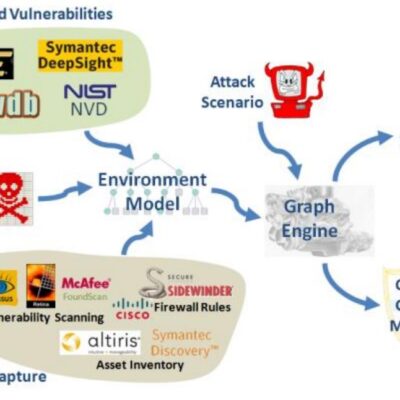
The security knowledge graph, a knowledge graph specific to the security domain, is the key to realizing cognitive intelligence in cyber security, and it also lays an indispensable technological foundation for dealing with advanced, continuous and complex threats and risks in cyberspace. NSFOCUS will publish a series of articles about...

Blog
Introduction to Web APIs of ADS
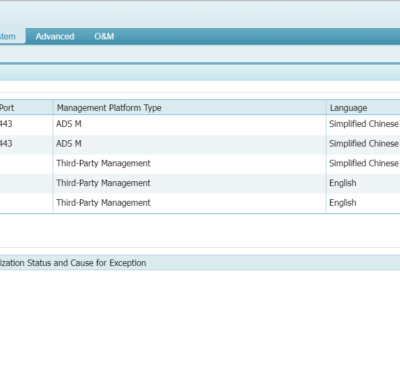
O&M personnel can quickly and easily perform operations such as information query and diversion configuration through web APIs. If web APIs of ADS are to be used by the management platform, mutual authentication between the management platform and ADS must be performed first to ensure security. The procedure is as...
Apache Hadoop Remote Code Execution Vulnerability (CVE-2022-25168) Alert
Overview Recently, NSFOCUS CERT found that Apache Hadoop officially fixed a command injection vulnerability. Since Apache Hadoop's FileUtil.unTar API does not escape the input filename before passing it to the shell, an attacker could exploit this vulnerability to inject arbitrary commands and thus achieve remote code execution. Affected users are...
Novel Browser in the Browser (BitB) technique used by threat actor UNC 1151 for phishing attacks
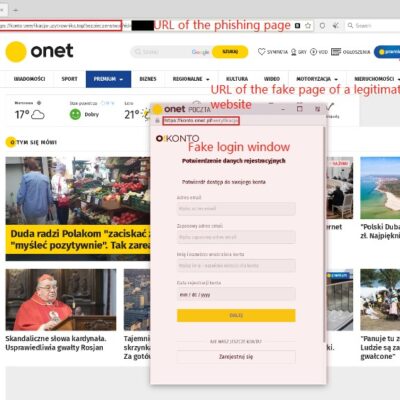
Background Recently, the cyber threat actor known as UNC 1151 group was spotted to use the Browser in the Browser (BitB) technique in its campaigns. This technique is used for phishing attacks by displaying a new browser window containing a fake login panel on the visited website. The window is...
Configuring HTTP Access Control on NSFOCUS WAF
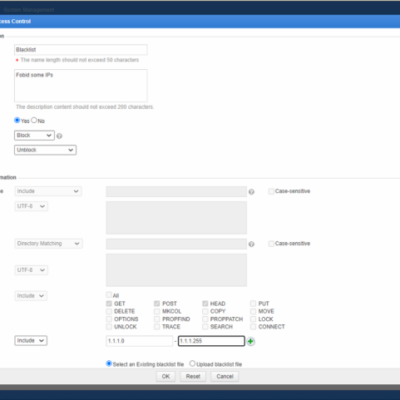
HTTP access control policies can prevent websites from unauthorized and malicious access by controlling over HTTP requests that protected resources respond to. NSFOCUS WAF inspects requests and takes actions when a request matches any of policies you specified. Multiple policies can be applied to a single website and evaluated in...
Critical VMware Product Vulnerability Alerts
Overview Recently, NSFOCUS CERT detected that VMware officially issued a security notice to fix multiple vulnerabilities in products such as VMware Workspace ONE Access, Identity Manager, and VMware vRealize Automation. Attackers can use these vulnerabilities to cause privilege escalation and remote code execution. At present, the official security update has...